
Real estate selects for people who get their energy from other people. The warmth, the persistence, the ability to read the room before anyone says a word: these are the skills the industry rewards immediately and visibly. Show up, connect, close. The feedback loop is fast and affirming.
What the industry does not reward right away is the capacity to sit alone with a problem.
Most agents fill that space with activity. Another call, another coffee meeting, another open house conversation that felt productive because it involved another human being. Human contact substitutes for the harder work of building. No systems get built. No honest self-evaluation gets done. No real point of view develops. The agent who was good early stays exactly that good.
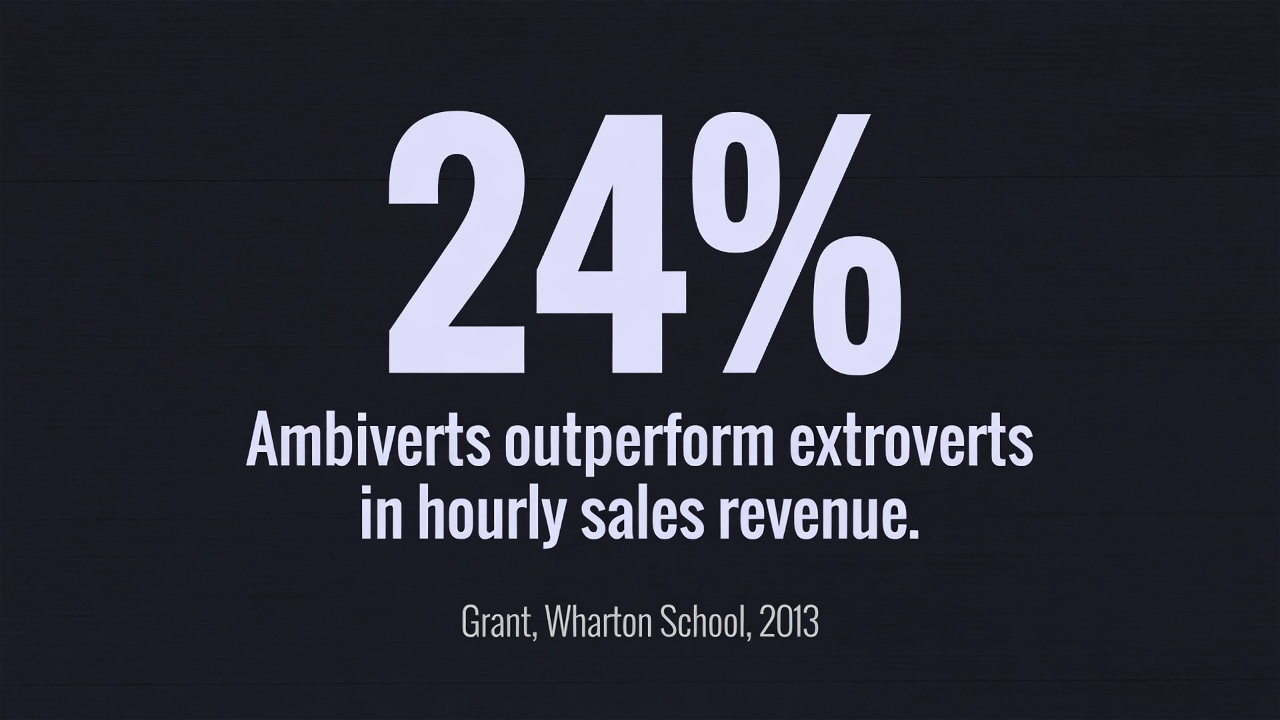
Underneath all of this is an assumption: extroversion drives sales success. The data disagrees. In a study of 340 outbound sales executives, Wharton researcher Adam Grant found that ambiverts (those who balance social engagement with reflective withdrawal) outperformed extroverts by 24 percent in hourly revenue. The trait that feels like it drives the business is not the trait that scales it.
I went through a stretch this past February where I had let my own structure erode. I picked up my phone close to 11 one morning and wrote: “I realize that I need to get a different workflow to ensure that I am starting with my brain-clear FIRST.” That phrase has stayed with me. Brain-clear first, before anything else gets in.
The agents I watch who have figured this out are not monks. They are social by nature and they love the contact. What changed is the sequence. Cal Newport defines the cognitive state that structured alone time produces as the only condition under which elite-level thinking actually happens. The agent who ritualizes that state does better relational work because they show up with a clear head, a prepared perspective, and honest visibility into their own business.
Each action in that solo block has a purpose. The alone time builds something. The relational time spends it.
The agent who has made the shift has a Tuesday morning that predates the first client contact by at least an hour. There is protected time on the calendar that no appointment can book. That time is the engine.
That is the business. Everything else is just activity.