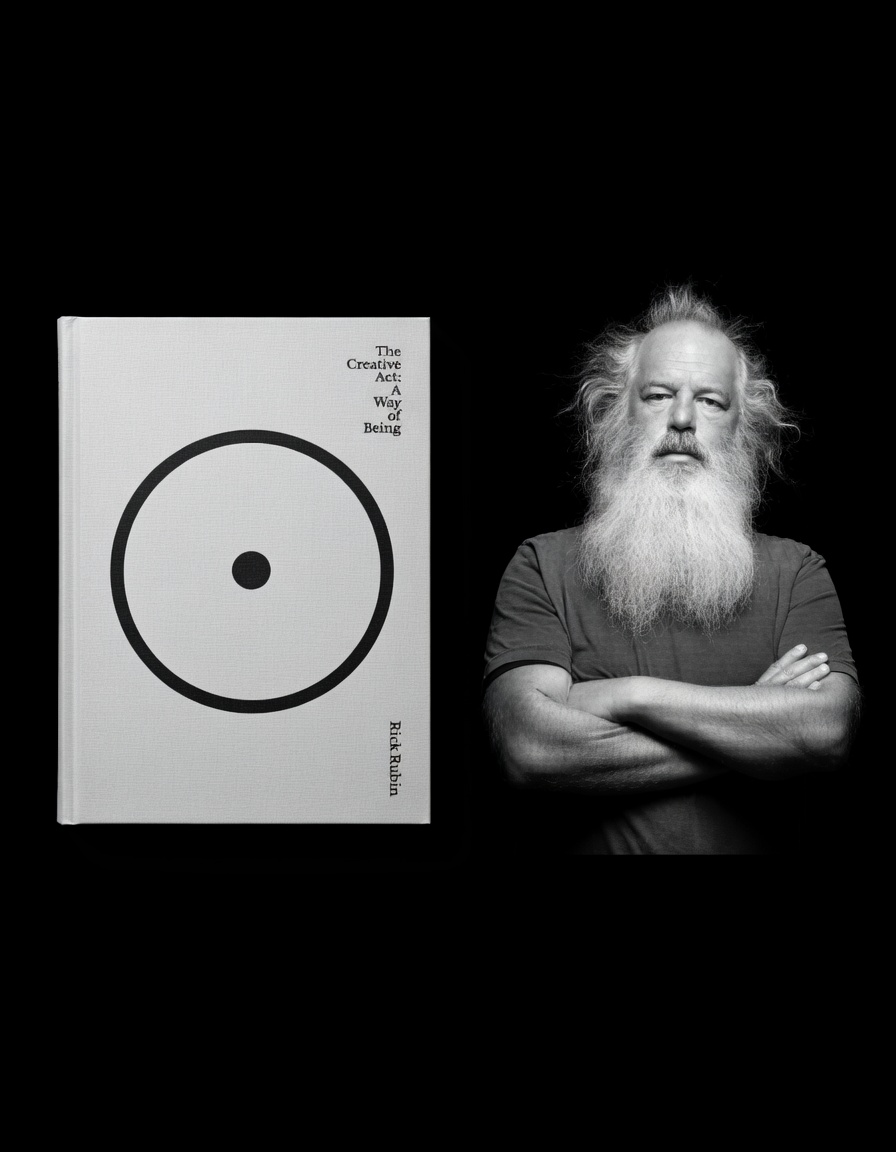
Rick Rubin has spent forty years producing records. His credits cover more genres, decades, and artists than almost anyone working in music. The Creative Act reflects that experience obliquely.
The book is a collection of short chapters, some only a few paragraphs, organized loosely around four phases of creative work: Seed, Experimentation, Craft, Completion. The observations are genuine. Many are striking. They are memorable. They compound slowly, if at all.
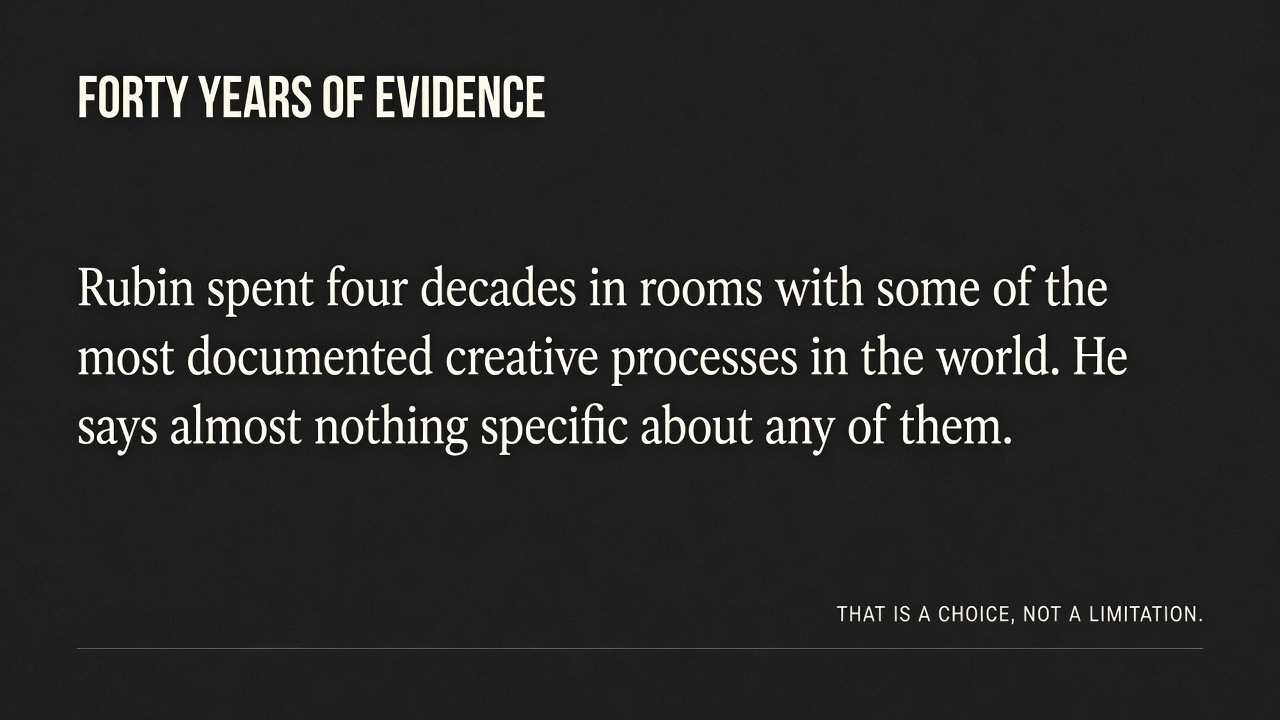
The limitation is abstraction. Rubin spent four decades in rooms with some of the most documented creative processes in the world. He says almost nothing specific about any of them. No named collaborators. No documented sessions. No stories grounding the philosophy in the actual work of making records. What the book is doing is offering a philosophy of creative work, not a manual. For someone who has never thought seriously about the relationship between observation and output, these pages are useful. The problem is that Rubin had forty years of documented evidence and chose not to use it. That is a choice, not a limitation. It is also the choice that puts a ceiling on what the book can deliver.
The permission it grants (to observe, to be patient, to trust the process) is genuine and worth something, particularly for early-stage creatives who need philosophical permission more than tactical instruction. For experienced practitioners looking for depth, a framework, or specificity, the book is thin. The insights arrive without anchoring. The reader cannot see how they were earned.
Read it in short sessions. Treat each chapter as a prompt rather than an argument. Do not try to read it cover to cover. The diminishing returns accumulate faster than the observations do.
It works better as a daily companion than as a book you finish.
5.4/10.