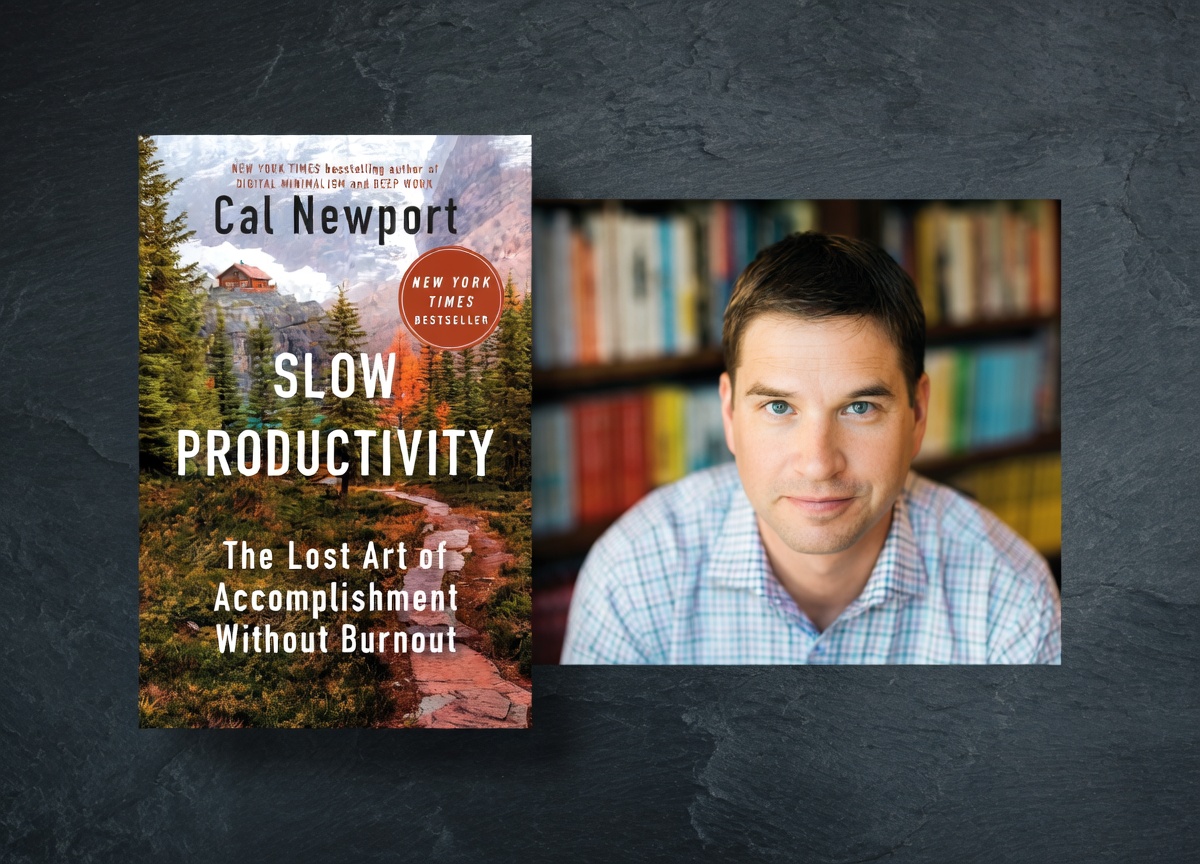
Cal Newport has written several books about knowledge work. Slow Productivity is his most coherent diagnosis. The prescription is thinner than the diagnosis.
His central concept is “pseudo-productivity”: the substitution of visible busyness for actual output. Knowledge workers spend time in meetings, managing email, and performing responsiveness because there is no other legible measure of whether they are doing their jobs. Newport is right. The observation is correct and worth a book.
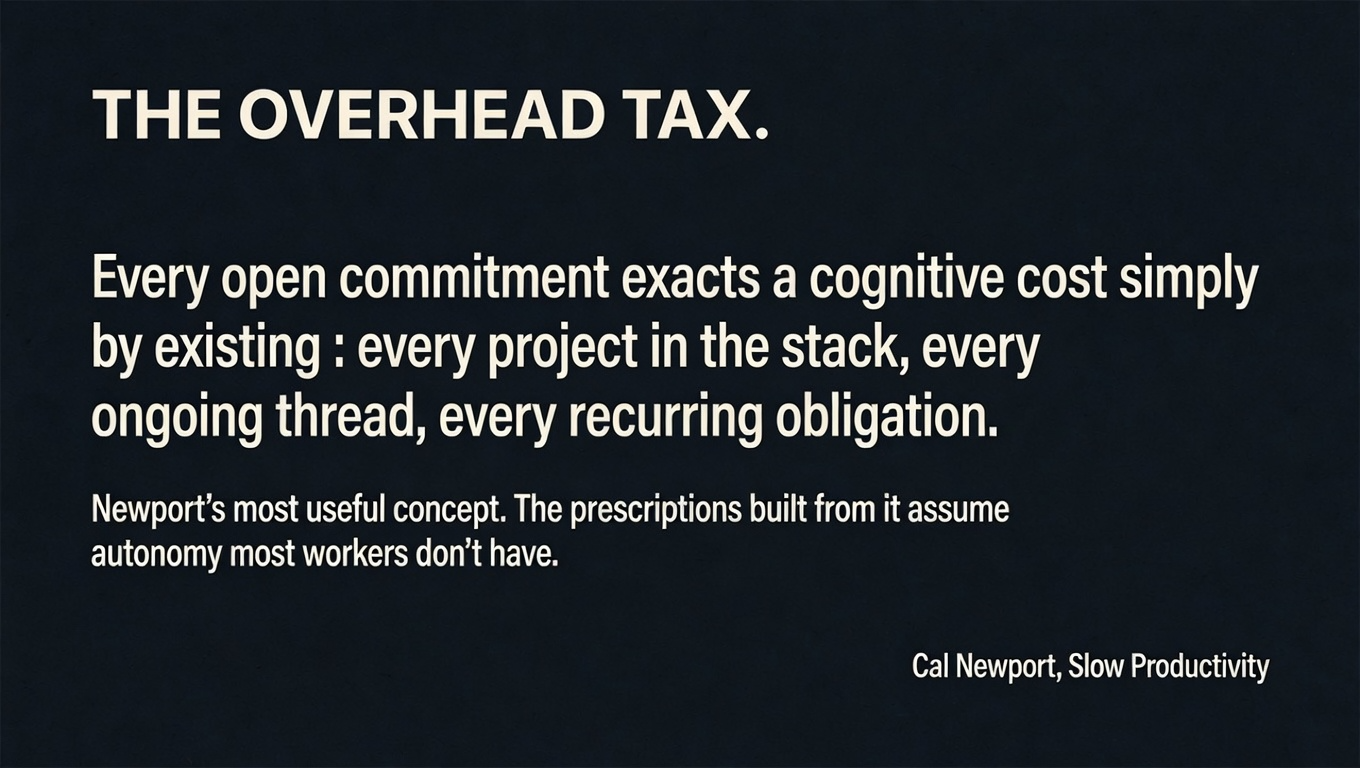
The supporting concept is the overhead tax. Every open commitment exacts a cognitive cost simply by existing, regardless of whether you are actively working on it: every project in the stack, every ongoing thread, every recurring obligation. Reducing open commitments reduces cognitive drag. Again, correct.
The three principles Newport builds from these observations are memorable: do fewer things, work at a natural pace, obsess over quality. They are memorable. They compound slowly, if at all.
The problem is the prescription. Newport’s examples come almost entirely from independent consultants and academics, professionals with full control over their schedule and workload. His suggested practices assume you can decline a meeting request, limit your active projects unilaterally, and work when the timing suits you. For most knowledge workers embedded in organizations that reward visible responsiveness, these prescriptions describe a useful vision and an impractical implementation guide. Following some of them literally in a real organization, with a manager and quarterly performance expectations, would create professional consequences Newport’s subjects would not recognize.
This is not a gap Newport is unaware of. He acknowledges it. He cannot close it because the gap is structural. The tools that would actually help workers in those environments are organizational and political, which is outside the scope of what Newport is writing.
Read it for the diagnosis and the overhead-tax concept. Treat the prescriptions as philosophy.
The gap between his professional world and the organizational reality most readers inhabit is where the book eventually stalls.
7.3/10.