
Every agent sizing up Google’s new listing ads feature is asking the same question. Will it work? It is a fair question, and most agents are asking it for the wrong reason.
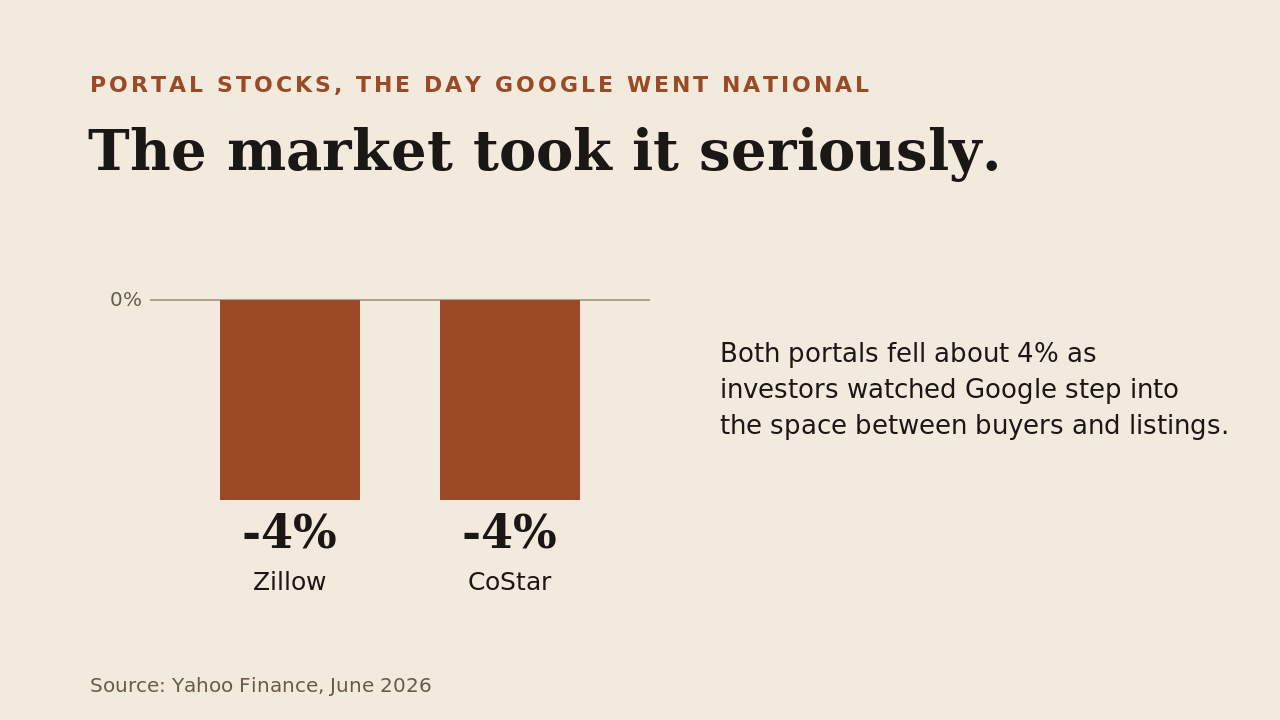
This month Google began putting home listings, with prices, photos, and buttons to call or message an agent, directly inside mobile search results across all fifty states. A buyer can reach an agent without ever opening a listing page. The market grasped the stakes at once. Zillow and CoStar each lost about 4% of their value the day it went national. Their whole business is the link between a buyer and a listing, and Google just stepped into the middle of it.
When agents ask whether the feature will work, they mean something short term: will it close deals this quarter. The instinct is sound, but the clock behind it is too short. On a short enough horizon almost any unproven tool looks skippable, so the safe move is always to wait.
What agents should be asking is this: what does this tool say about where buyers are heading, and is your business built to move when they do? That is a question about the posture of the business and the direction of the market. Often, agents can’t see beyond the closing table of their next transaction enough to know this is the question they should be asking.
The strongest agents reserve a deliberate share of their attention every quarter for testing new ways to put their listings, their brand, and their clients in front of people. I don’t think it unreasonable to interpret this as a fiduciary duty, since advocating for a client means chasing every credible new way to get their property seen. The best agents test what is next. The mediocre middle waits.
The pushback is money. No agent can fund every new tool, and none has to. An agent’s resources are time, energy, and money, and a shortage in one is covered by a surplus in another. The agent with no dollars to spare this quarter can spend an afternoon and real curiosity instead, and the budget that already works never gets touched.
Your job is being rewritten in real time, and it favors whoever shows up where the story of a home gets told. Google’s ads may become a real channel or they may fizzle, and the agents who tested them will know which, having spent almost nothing to find out. The rest will watch the pipeline thin and blame the market, the portals, the rules, and the algorithm, skipping the only variable that was ever theirs, the refusal to look past the quarter.