Nobody actually wants housing prices to go down.
When people say they want housing prices to fall, they almost always mean they want access to the market. Those are different problems, and conflating them is why every affordability conversation goes nowhere.
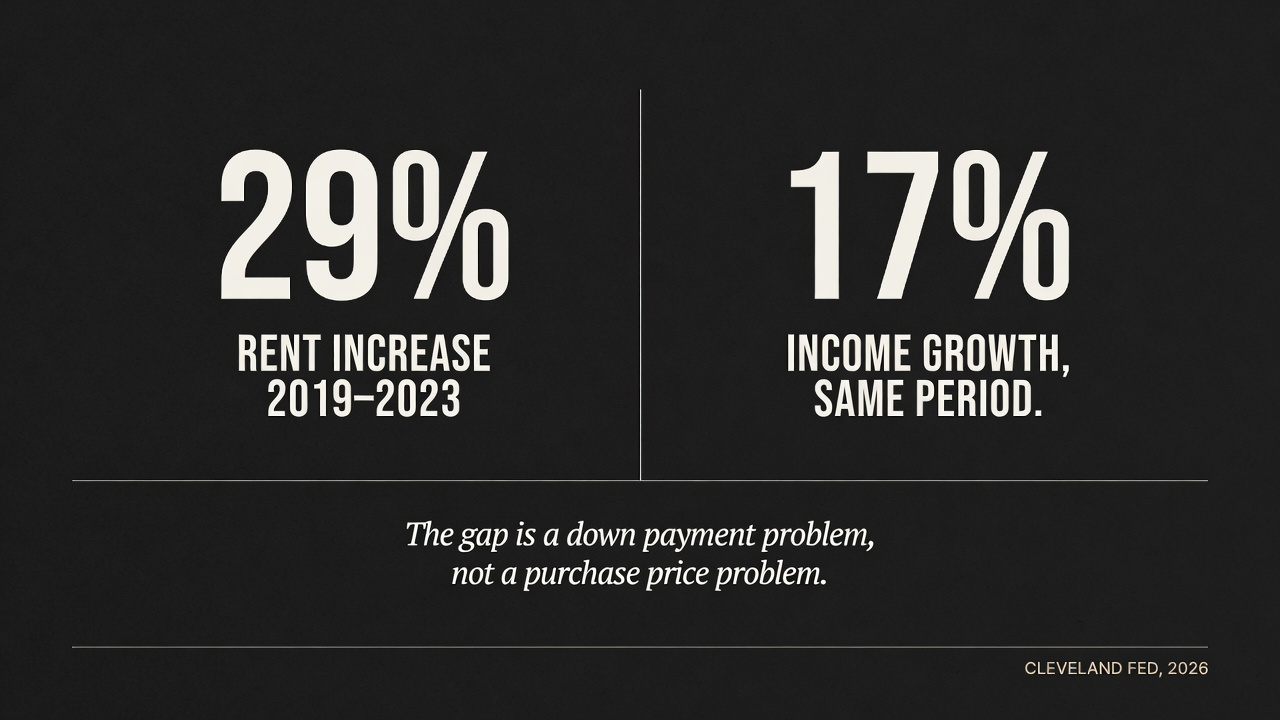
The median first-time homebuyer is now 40 years old, up from 28 in 1992. First-time buyer market share hit a record low of 21% in 2025. That is a supply and access problem. Apartment rents climbed 29% between 2019 and 2023 while median household income grew only 17%. The gap shows up in down payments. The people locked out are locked out because they cannot save fast enough to compete, not because the sticker price of homes is the issue.
A sustained price decline solves that problem the wrong way. Homeowners hold a median of 45% of their net worth in home equity. For Black and Hispanic families the figure is 63 to 66%. Price declines redistribute the affordability crisis rather than solving it. They transfer the problem from prospective buyers to existing owners, most of whom are middle-income households who made a sound long-term decision.
Falling prices is a simpler sentence. Simpler sentences win the news cycle. Supply expansion requires explaining what zoning reform means, why permitting timelines add cost, and why opposition to new development often comes from the same communities loudest about affordability. That is a harder conversation.
Real estate professionals understand this distinction better than almost anyone. They are the ones explaining, again, why the inventory is not there. They see what the buyers who finally got in actually paid. They know that the policy conversation and the market reality rarely describe the same situation.
That conversation is the one the industry keeps avoiding.